Sensory Play in Its Purest Form: The Learning Hidden in Mud
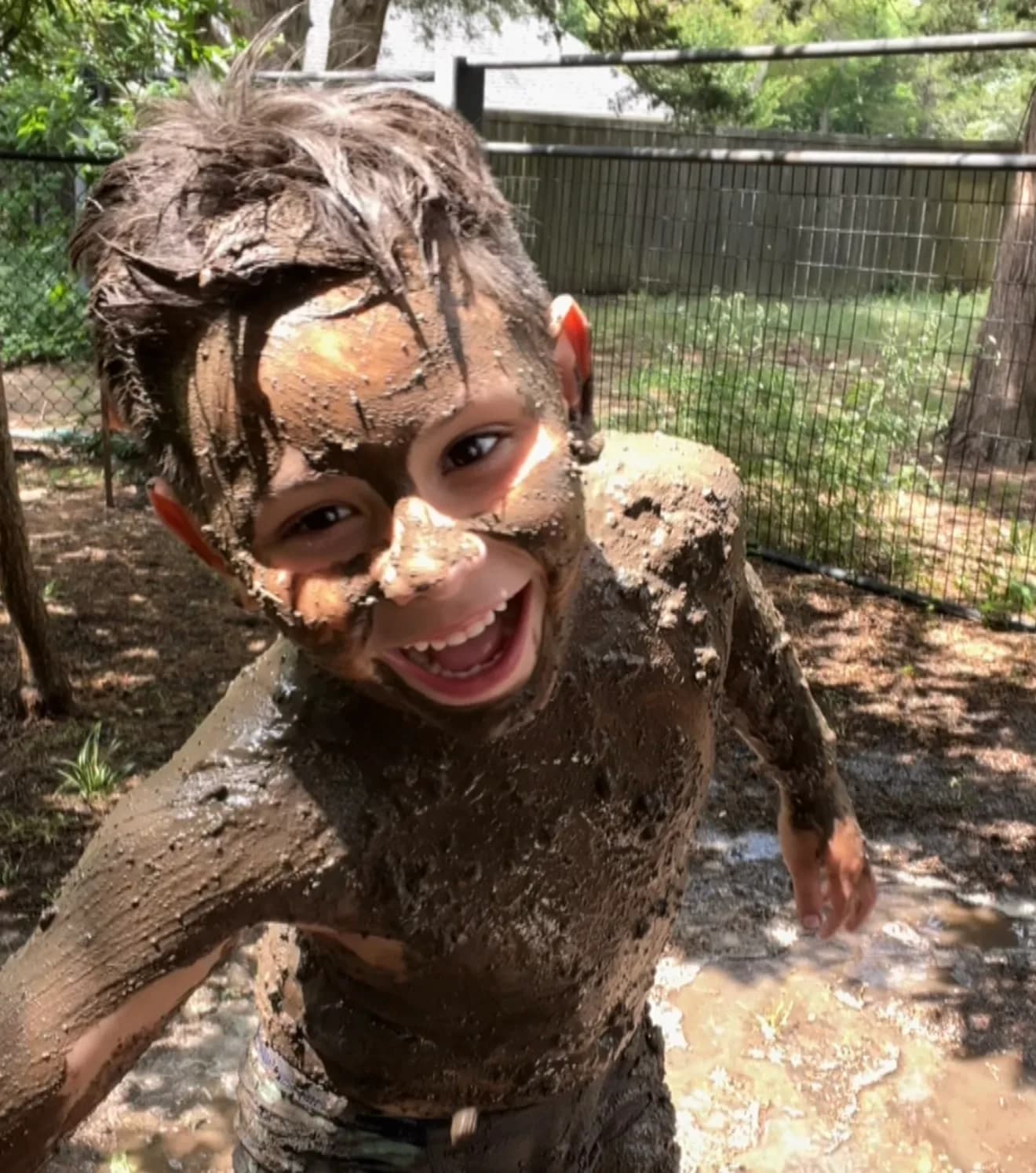
You said “OUTSIDE”… so let’s talk about how to turn something as simple as mud play into intentional, meaningful learning—without taking away the magic of it.
The shift starts with your mindset. You’re not out there directing every move or turning play into a lesson plan. Instead, you’re noticing what your child is already doing, naming what’s happening, and gently extending it. That’s where the real learning lives.
When your child is making mud pies, what looks like simple play is actually early math and sequencing in action. As they scoop, pour, and mix, you can naturally introduce language like “You used two scoops—what happens if we add more water?” Without interrupting their flow, you’re helping them understand quantity, cause and effect, and the beginnings of measurement.
Then there’s mud soup, which is rich with science and sensory exploration. As they combine dry dirt, wet mud, grass, and whatever else they find, they’re experimenting with texture and change. This is your moment to introduce descriptive language—thick, runny, gritty, smooth—and ask simple questions like, “Why do you think it changed when we added water?” What you’re really doing is laying the foundation for scientific thinking.
As play deepens, you might see them begin to build—cakes, roads, bridges. This is where engineering and problem-solving naturally emerge. You can challenge them gently by asking if their structure can stand or hold something, giving them space to test, fail, and try again. That process is where resilience and critical thinking are formed.
If the play turns imaginative, like a mud kitchen or pretend bakery, lean into it. Let them take your order, explain their creations, and tell their story. In these moments, language development, social skills, and confidence are all growing at once, without a worksheet in sight.
Even something as simple as comparing dry dirt to wet mud becomes a powerful scientific experience. When you ask which one sticks better and why, you’re guiding them into observation and prediction—skills they’ll use for the rest of their lives.
And underneath all of this is something even deeper. Sensory play like this supports nervous system regulation. When children are fully immersed—hands in the mud, feet grounded, no rushing—they are not just playing, they are calming their bodies, organizing their minds, and connecting to the world around them.
The truth is, you don’t need a formal curriculum outside. You don’t need to overcomplicate it. A few intentional words, a little curiosity, and the freedom to explore are more than enough.
This is what real learning looks like. Messy, hands-on, deeply engaging, and exactly how children were designed to learn.