How I Raised More Independent Kids (No Homeschooling Required)
If there’s one question I get asked often, it’s:
“How did you get your kids to be so independent?”
And honestly?
I don’t think it’s because we homeschool.
I know independent, capable kids in public school, private school, and homeschool. Independence isn’t built by a curriculum—it’s built in the everyday rhythm of family life.
As a former teacher turned homeschool mom, I used to think independence came from teaching kids to follow directions well.
Now?
I think independence grows when kids are trusted with real responsibility, given opportunities to contribute, and allowed to practice life skills—even imperfectly.
And here’s the good news:
You do not have to homeschool to raise independent kids.
You can start today, right in your own home.
## 1. Stop doing everything for them
This one was hard for me.
Sometimes helping too much feels loving. We want things done faster, cleaner, easier.
But over-helping can quietly send a message:
> “You can’t do this.”
When what we really want them to believe is:
> “I am capable.”
That doesn’t mean throwing kids into responsibilities they aren’t ready for. It means slowly inviting them into real life.
Let them try.
Let them struggle a little.
Let them practice.
Even if it takes longer.
Even if it’s messy.
Even if it isn’t done perfectly.
Because confidence grows through doing.
A phrase I started using more:
“I know you can figure this out.”
## 2. Change the way your family thinks about chores
This shift changed everything in our home.
I stopped treating chores like punishment.
No:
> “Because you didn’t listen, now go clean.”
No:
> “Ugh, we have to do chores.”
Instead, we changed the language.
“We help each other because this is our home.”
The goal isn’t raising kids who obey chores.
The goal is raising kids who contribute.
Kids want to feel needed.
When children feel like valuable members of the family team, responsibility feels different.
Try saying:
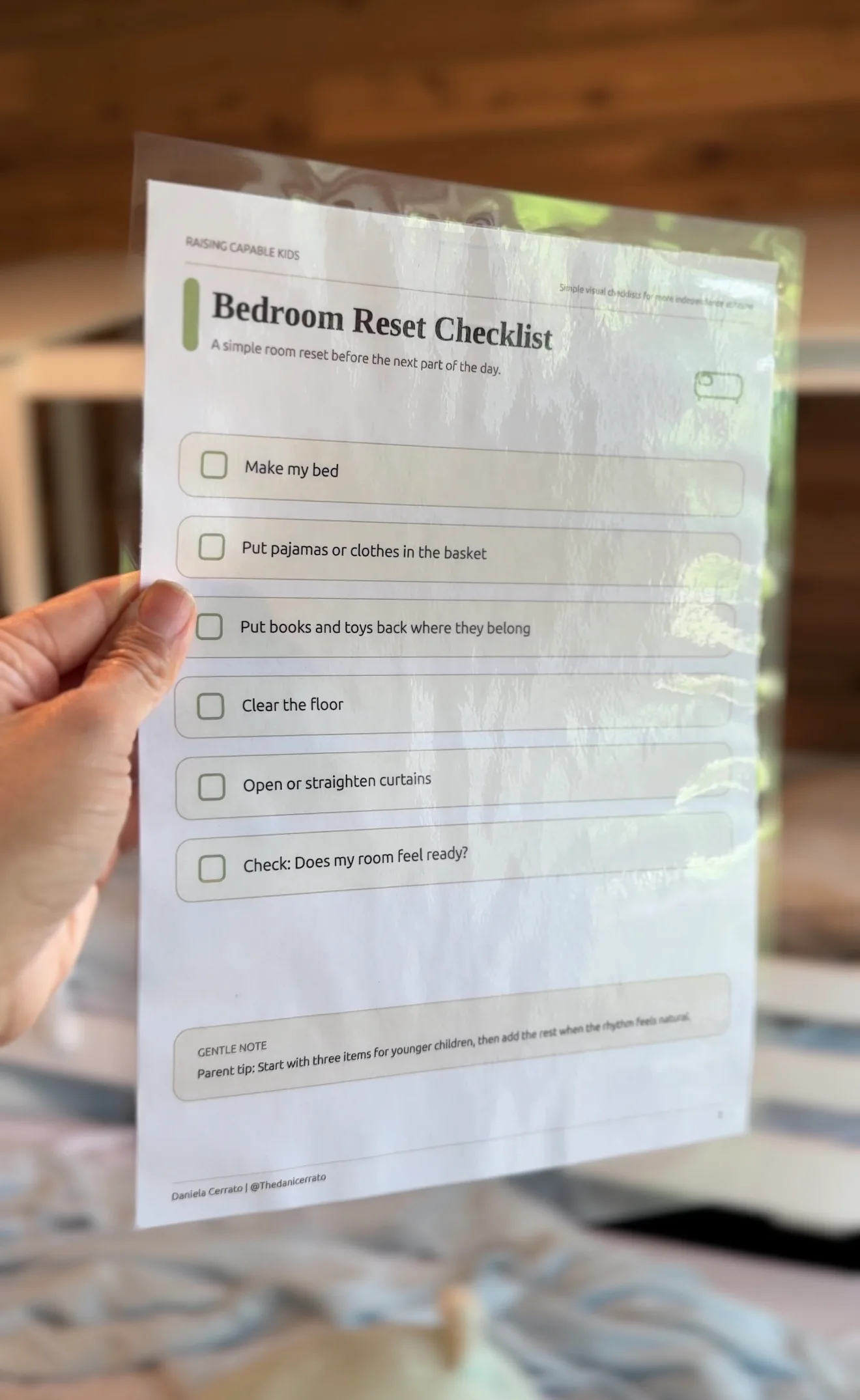
“Let’s reset the living room together.”
Or:
“We all live here, so we all help.”
Language matters.
Connection matters.
And honestly? Doing it together matters too.
## 3. Make responsibility fun
Not everything has to feel serious.
Turn on music.
Race the timer.
Fold laundry together while talking.
Make cleanup part of family rhythm instead of family conflict.
The more negative emotion attached to responsibility, the more resistance kids build around it.
But when chores become moments of connection?
Kids stop seeing them as punishment.
And start seeing them as normal life.
## 4. Include them—even when they do it wrong
This one takes patience.
Sometimes kids load the dishwasher wrong.
Fold towels terribly.
Sweep crumbs into different corners.
But here’s what I had to learn:
Practice matters more than perfection.
If we constantly redo everything or criticize every mistake, kids stop wanting to help.
They think:
> “Why try?”
Instead:
Encourage effort.
Teach gently.
Correct kindly.
And remember:
You’re not just getting a task done.
You’re teaching life skills.
One day, these little moments become confidence.
## 5. Use positive reinforcement
Independent kids aren’t usually built through criticism.
They’re built through encouragement.
Instead of only noticing what they forgot, notice what they did well.
Try phrases like:
“I noticed how responsible you were.”
“Thank you for helping our family.”
“You worked really hard on that.”
Positive reinforcement builds ownership.
And ownership builds motivation.
## 6. Let connection lead
I think many of us were raised to believe independence looked like obedience.
But real independence?
It looks like confidence.
Problem-solving.
Taking initiative.
Trusting themselves.
And kids learn those things best in homes where they feel connected, capable, and included.
No—you do not have to homeschool to raise independent kids.
You just need opportunities for them to practice.
Little by little.
Mess by mess.
Responsibility by responsibility.
And one day, you’ll look around and realize:
The little person you kept including?
Actually became capable.